

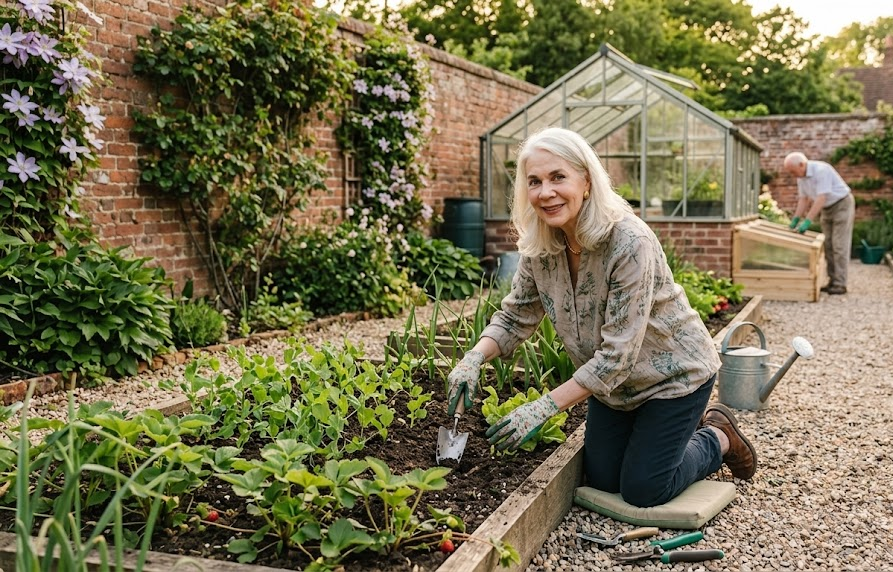
As fellow seniors, we know that gardening is a fantastic, often ignored health booster for our generation. You do not need a gym membership, a fitness tracker, or special shoes. Simply show up, get your hands in the dirt, and follow nature’s rhythm.
According to the NHS, adults aged 65 and older should get at least 150 minutes of moderate activity each week. As seniors, we should do balance and strength exercises at least two days a week. Gardening can help us achieve these goals, and it feels more enjoyable than a workout.
At Cycle of Time, we offer a dedicated wellness coaching service in Leeds, designed to improve the lives of older adults through tailored plans and expert guidance.
How Gardening Works Like Exercise
Think of the garden as our personal, low-impact gym that helps us stay strong for our everyday tasks. It strengthens our bodies in ways that are immensely useful in daily life. When you pull weeds, you build crucial grip strength. Digging and raking safely engage our shoulders and back.
Carrying pots helps strengthen our core, while simple tasks like picking dead flowers or watering with a can keep our wrists flexible. All these actions add up. As time passes, this hands-on routine helps us maintain the strength we require for good balance and coordination, providing a safety net for recovery if we happen to trip.
How Gardening Boosts Mental Health
For many of us, our backyard or allotment is our ultimate sanctuary. Gardening offers more than just physical benefits; its positive impact on our mental health is significant. A 2025 RHS Gardening report found that 77% of gardeners in the UK said their mental well-being improved due to their hobby. This reflects something we experience firsthand: regular time outside with a clear, low-pressure task reduces anxiety, lifts mood, and creates a reliable sense of achievement.
Beyond emotional wellness, this consistent outdoor exposure can help regulate sleep. It provides an invaluable sense of focus, especially for those of us who reside alone or crave more routine. Looking after a garden offers a calm yet important daily anchor. The scent of wet earth after rain, the sound of birds, or even the feel of a cool pot can be incredibly grounding.
Seasonal Gardening Activities to Boost Physical Fitness
Our gardens in the UK keep us busy with activity throughout the year. Each season has its own tasks that help us stay active and alert. We can plant, weed, or enjoy nature’s beauty. There’s always something to do in the garden.
| Season | Activity | Physical Benefit |
| Spring | Planting bulbs and seedlings | Coordination, fine motor skills |
| Summer | Watering, pruning, and harvesting | Stamina, upper body strength |
| Autumn | Raking leaves, dividing plants | Cardiovascular fitness, flexibility |
| Winter | Tidying beds, container planting | Gentle strength, spatial awareness |
Staying active with a variety of activities throughout the year helps keep our bodies very flexible and our minds sharp. Trying new things and changing our routines can bring fresh energy to our daily lives.
Staying Active Through Autumn and Winter
We don’t have to stay inside all winter just because it’s cold in the mornings. The golden rule of senior gardening is to adjust. When you can, do your gardening tasks in a covered area. A wooden garden shed can be a cosy, dry place to repot plants, clean your tools, or start seeds during the winter.
On warmer days, try to wear layers and keep your activities simple. You can check your compost, trim shrubs without leaves, or walk around the garden to think about what you will need for spring.
You can opt for handcrafted timber buildings from experienced regional suppliers like Elfords to construct a solid, reliable garden haven for potting and storage.
How to Make Gardening Safer for Seniors
As we age, a little smart planning ensures we can keep pottering safely. Here’s how to make the garden safer for UK seniors:
- Raised Beds: Using raised beds actually means you won’t have to kneel or bend uncomfortably. Beds at waist height are easier on your back and knees.
- Non-Slip Pathways: Safe paths are important. Wet stones and uneven gravel can be dangerous. Using smooth, textured paving on a solid base prevents falls.
- Tool Storage at Waist Height: Storing tools at waist height means you will not have to reach or crouch repeatedly, which can cause strain. Keeping everything within reach on shelves or hooks in a sturdy shed is helpful.
These adjustments don’t limit your gardening; they actually make it more enjoyable for longer. A well-designed garden helps us enjoy the outdoors and makes it easier to spend time outside with less risk and more confidence.
For a visual companion to these steps, check this real-world guide that outlines how simple modifications and safe pacing can protect our joints:
Conclusion
Regular gardening helps seniors stay mobile, improve mental health, and find a sense of purpose year-round. Every task, from planting in spring to tidying in winter, builds strength and boosts happiness. Begin with simple tasks, adjust your garden space as needed, and let the changing seasons inspire your activities.
For more insights, contact us at Cycle of Time now to avail wellness coaching focused on active ageing.